
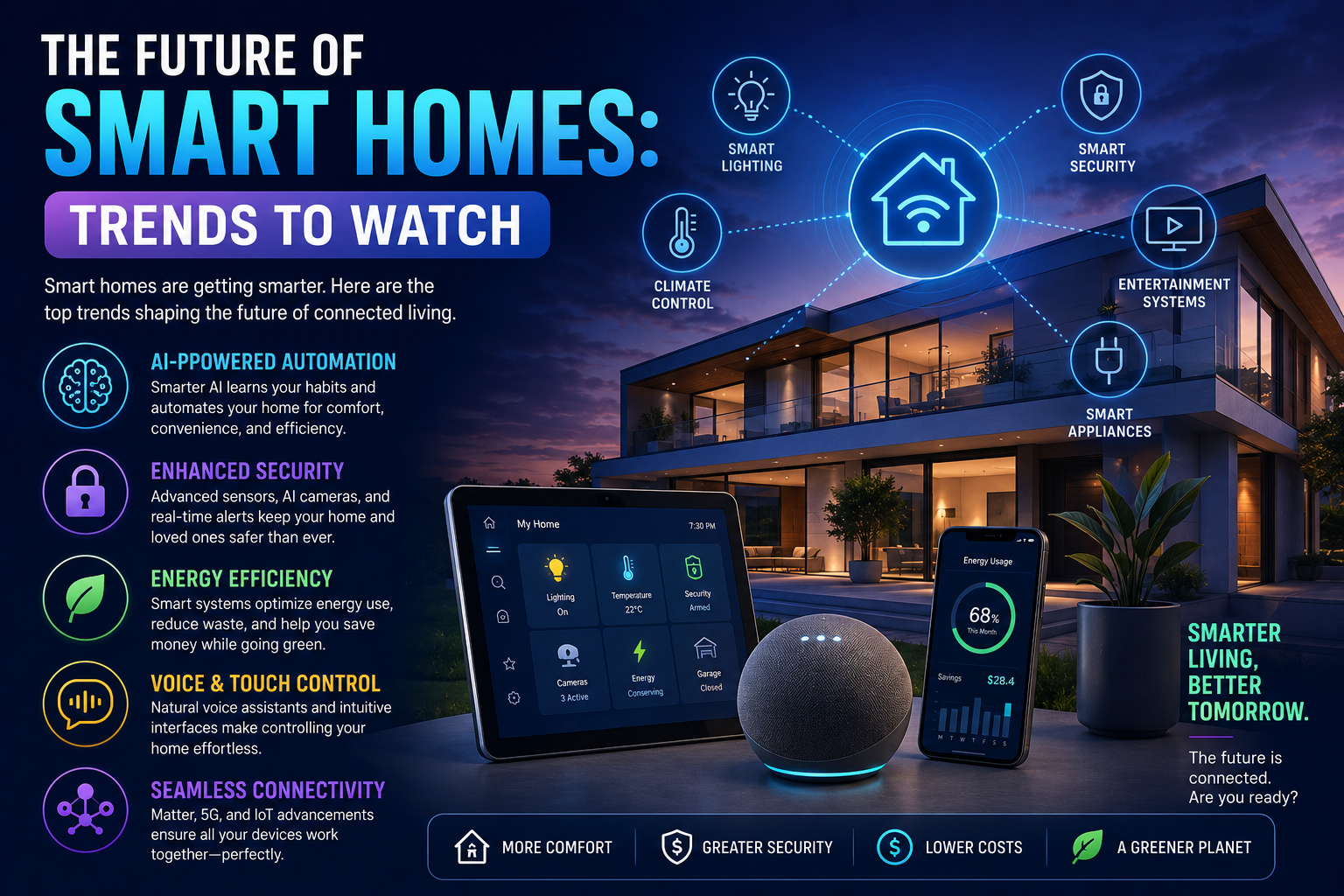
The idea of a smart home was once considered futuristic, but today it has become a reality for millions of households worldwide. Smart devices now control lighting, security systems, entertainment, appliances, and even energy consumption.
As technology continues to evolve, smart homes are becoming more intelligent, efficient, and connected. Artificial intelligence, automation, faster internet connectivity, and the Internet of Things (IoT) are transforming how people interact with their living spaces.
In 2026, smart home technology continues to expand rapidly, offering greater convenience, improved security, and enhanced energy efficiency. This article explores the most important smart home trends shaping the future of residential living.
What Is a Smart Home?
A smart home uses internet-connected devices that communicate with each other and can be controlled remotely.
Common smart home devices include:
- Smart speakers
- Smart lighting
- Smart thermostats
- Security cameras
- Smart locks
- Connected appliances
Most smart home systems can be controlled using:
- Smartphones
- Tablets
- Voice assistants
- Automation platforms
The goal is to improve convenience, comfort, security, and efficiency.
Why Smart Homes Are Becoming More Popular
Several factors contribute to growing smart home adoption.
Convenience
Devices can be controlled remotely from almost anywhere.
Energy Savings
Automation helps reduce unnecessary energy usage.
Improved Security
Connected security devices provide real-time monitoring and alerts.
Automation
Routine tasks can occur automatically without user intervention.
These benefits continue driving demand for smart home technologies.
Trend 1: Artificial Intelligence-Powered Automation
Artificial intelligence is becoming the central intelligence layer of modern smart homes.
Instead of simply following commands, AI systems can learn user behavior and preferences.
Examples
AI can learn:
- Preferred room temperatures
- Lighting schedules
- Sleep patterns
- Daily routines
As a result, homes become increasingly personalized.
For a broader discussion, read How Artificial Intelligence Is Changing Everyday Life in 2026.
Trend 2: Smarter Voice Assistants
Voice assistants have become a key part of smart home ecosystems.
Modern assistants can:
- Understand natural language
- Handle complex requests
- Control multiple devices
- Provide contextual responses
Future assistants are expected to become even more conversational and proactive.
Trend 3: Advanced Home Security Systems
Security remains one of the most popular smart home categories.
Popular Security Devices
- Smart cameras
- Smart doorbells
- Motion detectors
- Smart locks
Benefits
- Remote monitoring
- Real-time notifications
- Video recording
- Automated responses
Smart security systems provide greater awareness and control over home environments.
Trend 4: Energy-Efficient Smart Homes
Energy management is becoming increasingly important.
Smart technologies help homeowners reduce consumption and lower utility costs.
Examples
- Smart thermostats
- Automated lighting
- Energy monitoring systems
- Smart appliances
These tools improve efficiency without sacrificing comfort.
Trend 5: Smart Appliances
Household appliances are becoming more connected.
Examples include:
- Refrigerators
- Washing machines
- Ovens
- Dishwashers
Smart appliances can:
- Monitor performance
- Send maintenance alerts
- Optimize energy usage
These features improve convenience and reliability.
Trend 6: Improved Device Compatibility
One challenge facing smart home users has been device compatibility.
Different manufacturers often use different ecosystems.
Future developments focus on:
- Better interoperability
- Unified standards
- Easier integration
Consumers increasingly expect devices to work together seamlessly.
Trend 7: Health and Wellness Monitoring
Smart homes are beginning to support personal health goals.
Emerging technologies include:
- Air quality monitoring
- Sleep tracking
- Smart lighting systems
- Environmental sensors
These systems help create healthier living environments.
Trend 8: Better Home Networking
As homes become more connected, reliable internet access becomes critical.
Smart homes often support:
- Smartphones
- Computers
- Streaming devices
- Security systems
- Smart appliances
Strong Wi-Fi infrastructure is essential.
For troubleshooting advice, see Common Wi-Fi Problems and Their Solutions.
Trend 9: Predictive Maintenance
Future smart homes will increasingly identify problems before they become serious.
Examples include:
- Water leak detection
- Appliance wear monitoring
- HVAC maintenance alerts
Predictive maintenance helps reduce repair costs and prevent disruptions.
Trend 10: Sustainable Living Technologies
Environmental concerns continue influencing technology development.
Future smart homes are expected to emphasize:
- Energy conservation
- Water efficiency
- Renewable energy integration
- Resource optimization
Automation can help households reduce environmental impact while maintaining convenience.
Challenges Facing Smart Homes
Despite their advantages, smart homes face several challenges.
Privacy Concerns
Many devices collect significant amounts of user data.
Cybersecurity Risks
Poorly secured devices may create vulnerabilities.
For protection strategies, read Cybersecurity Tips Everyone Should Follow in 2026.
Cost
Advanced systems can still require significant investment.
Complexity
Managing multiple devices may become overwhelming for some users.
Fortunately, technology continues improving in these areas.
How to Start Building a Smart Home
If you’re new to smart home technology, start with a few simple devices.
Recommended First Purchases
- Smart speakers
- Smart bulbs
- Smart plugs
- Smart security cameras
These devices are affordable, easy to install, and provide immediate benefits.
Smart Home Best Practices
Secure Your Network
Use strong Wi-Fi passwords and modern encryption.
Keep Devices Updated
Firmware updates often improve security and performance.
Review Privacy Settings
Understand what information devices collect.
Buy Reputable Products
Trusted brands generally provide better support and security updates.
Frequently Asked Questions
What is a smart home?
A smart home uses connected devices and automation technologies to improve convenience, security, and efficiency.
Are smart homes secure?
They can be secure when devices are updated regularly and protected with strong security settings.
Do smart homes save money?
Many smart technologies help reduce energy consumption and lower utility costs.
Is AI important for smart homes?
Yes. AI enables systems to learn user behavior and automate tasks more intelligently.
What is the best smart home device for beginners?
Smart speakers and smart lighting systems are excellent starting points.
Conclusion
Smart home technology is rapidly transforming modern living. Through advancements in artificial intelligence, automation, energy management, and connected devices, homes are becoming smarter, safer, and more efficient.
As technology continues evolving, smart homes will likely become even more personalized, sustainable, and convenient. Whether you’re interested in security, comfort, energy savings, or innovation, smart home technology offers exciting opportunities for the future.